OverviewProcessVariationsTool materialsLubrication and cooling
Deep drawing is a sheet metal forming process in which a sheet metal blank is radially drawn into a forming die by the mechanical action of a punch. It is thus a shape transformation process with material retention. The process is considered "deep" drawing when the depth of the drawn part exceeds its diameter. This is achieved by redrawing the part through a series of dies.
Advantages to Drawing AluminumDisadvantages to Drawing AluminumForming AluminumSummaryAluminum has many advantages, including: 1. It is about one-third the weight of steel, which makes it an ideal candidate for aerospace products that require certain strength-to-weight ratios. 2. It has good dent resistance for outer body automotive panels. 3. It is fully recyclable. 4. It is rust-proof (brown rust).在thefabricator上ProLean
Deep drawing, at its essence, is a sheet metal forming process where the metal sheet is radially drawn into a forming die by the mechanical action of a punch. The depth of
Deep drawing operations often involve a series of dies, each of which gradually decreases the diameter and increases the height/depth of the component without mcficantly
Deep drawing is an essential metal-forming process that transforms flat sheets of metal into intricate three-dimensional shapes. This technique is widely employed to produce
According to the definition in DIN 8584, deep drawing is the tensile-compressive forming of a sheet blank (or, depending on the material, also of foils or plates) to a hollow body open on
Explore the challenges and advancements in sheet metal forming technologies, particularly deep drawing processes. Understand the impact of material properties, tooling parameters, and the
Deep drawing is a metal forming process where a flat sheet of metal (called a blank) is radially drawn into a forming die by the mechanical action of a punch. The sheet is pressed into the die, which gradually transforms the blank into
Deep drawing is a sheet metal forming process that involves radially drawing a flat sheet of metal into a die to create a three-dimensional shape. Unlike other metal forming methods, deep drawing is characterized by
Ultimately, the deep drawing process turns flat sheets of aluminum (known as blanks) into hollow cylindrical or rectangular components. These parts and products can have
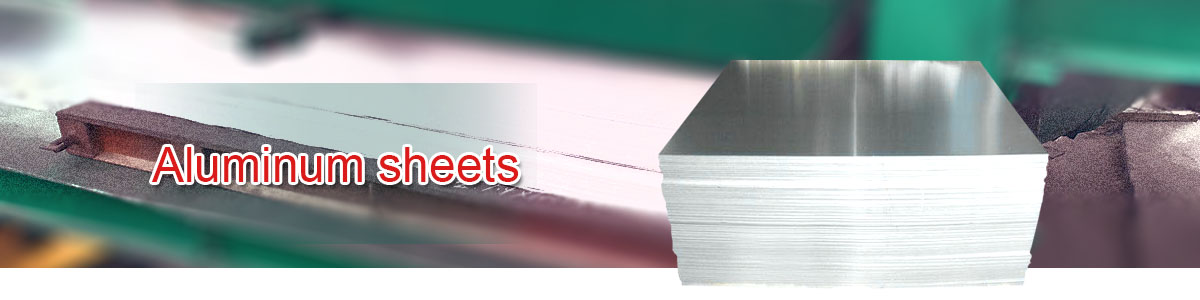
mc's aluminum sheets and circular products for deep-drawn offer superior deep drawing performance and low ear rate, ensuring optimal results under consistent deep drawing process parameters, sheet thickness, and mold
Common shapes for deep drawn products include cylinders for aluminum cans and cups for baking pans. Irregular items, such as enclosure covers for truck oil filters and fire extinguishers, are also commonly manufactured by the deep
Appropriate materials include aluminum alloys, brass, copper and copper alloys, titanium, cold rolled low carbon sheet steel, and some stainless steels. Ideal shapes for deep
Deep drawing is complex deformation affected by the geometrical and process parameters. Deep drawing process optimization is a challenging task. This paper presents a
Deep drawing, the process of turning sheet metal into hollow parts, is a critical production process and from the measurement of certain material properties it can be seen that aluminum has
At TMS, we combine deep drawing and metal spinning to produce parts that deep drawing alone or spinning alone might not be able to do. Parts can be created utilizing sheet or tube forms of
Sheet metal deep drawing services is an effective and efficient sheet metal forming operation. In this guide, you will find all information about deep drawing – from step-by-step process, calculations, advantages to