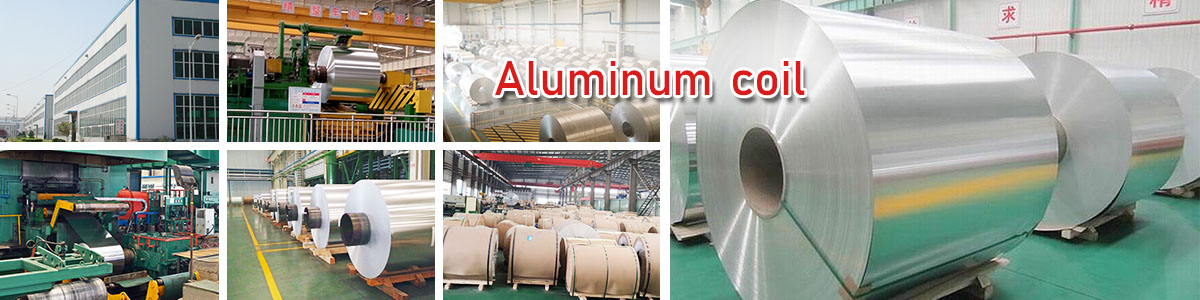
5/10/2021 Type 5052 aluminum contains 97.25% Al, 2.5%Mg, and 0.25%Cr, and its density is 2.68 g/cm 3 (0.0968 lb/in 3 ). Generally, 5052 aluminum alloy is stronger than other popular alloys such as 3003 aluminum and also has improved corrosion resistance due to the absence of copper in its composition. The properties of 5052 aluminum alloy differ based on
This study tries to replace graphite bipolar plates in fuel cells with surface-modified aluminum alloy 5052. To improve the surface characteristics of Al alloy, Ni-Mo-P coatings were deposited on the substrates under various pH values and concentrations of sodium molybdate (Na <SUB>2</SUB>MoO <SUB>4</SUB>) by an electroless deposition process. The effects of the controlling conditions on the
In this research, five strips, made of Al-7075 in the routes A and C and five strips made of Al-5052 in the route C, were subjected to the equal channel angular rolling (ECAR) process during 5 passes in order to study the changes of hardness in the ECARed Al-7075-o and 5052
Aluminium 5052 UNS A95052 Aluminium Alloys Aluminium alloy 5052 contains nominally 2.5% magnesium 0.25% chromium. It has good workability, medium static strength, high fatigue strength, good weldability, and very good
Aluminum Chromate Conversion Coatings per MIL-C-5541 (MIL-DTL-5541) and ASTM B449-93. ** Advanced Plating Technologies no longer offers chromate services as a final finish. Please use the below content for reference only **. The chromate process provides a clear iridescent to slightly golden iridescent film of low contact
Type I Chromic acid anodized coating. This process is used principally for the treatment of aircraft parts. An example is the Bengough-Stewart process where a 30 - 50 g/l chromic acid bath is maintained at 100 F and the voltage is gradually raised to
Type IC Anodized coating produced in a non-chromic acid electrolyte. As with other Type I coating processes, the treatment is designed to impart corrosion resistance, paint adhesion, and/or fatigue resistance to an aluminum part. Coating weights must
20/7/2021 Our process followed material Spec, but no matter how many times we tried,we always got a poor appearance: surface appears \"cloudy\",the color on surface is not uniform,it seems that some place get a very thin coating--it\'s even worse near
1/8/2021 Modelling the cold spray process can provide an approach to improve the process, and then increase the quality of the coatings. In this paper, a diffusion model with stress effect is introduced to analyze the alloying process of Ni/Al coating, and the effect of
In this research, five strips, made of Al-7075 in the routes A and C and five strips made of Al-5052 in the route C, were subjected to the equal channel angular rolling (ECAR) process during 5 passes in order to study the changes of hardness in the ECARed Al-7075-o and 5052
2/8/2021 This paper presents a new approach in laser welding of Al-5052 and heat Al-6061 aluminum alloys, which are challenging materials for a good laser welding quality. The process consists of applying very small size of 0.1 mm to provide a high density of power that
The mechanical properties of Al 5052-H32 are: elastic modulus of 70.3 GPa, yield strength of 193 MPa, ultimate strength of 228 MPa and strain to failure of
1/12/2021 In this paper, we report on the microstructural evolution and mechanical properties of a 5052 Al alloy processed by rotationally accelerated shot peening (RASP). A thick deformation layer of ∼2 mm was formed after the RASP process. Nano-sized grains, equiaxed subgrains, and elongated subgrains were observed along the depth of the deformation layer. Dislocation accumulation and dynamic
3 Superhydrophobic Surfaces on 5052 Aluminum Alloy Obtained from LDH Film Modified with Stearic Acid for nhanced Corrosion rotection Polarization curves were recorded at a sweep rate of 1 mV s −1 in the range of −1900 to 1300 mV from the open
1. Introduction Biomimetic deals with the study of models, systems or processes that imitate nature, which has been adapted to solve the current problems of humanity 1 1 Benyus JM. Biomimética: inovação inspirada pela natureza. São Paulo: Editora Cultrix; 2007., 2 2 Liang Y, Peng J, Li X, Huang J, Qiu R, Zhang Z, et al. Wettability and contact time on a biomimetic superhydrophobic
Type I Chromic acid anodized coating. This process is used principally for the treatment of aircraft parts. An example is the Bengough-Stewart process where a 30 - 50 g/l chromic acid bath is maintained at 100 F and the voltage is gradually raised to
Aluminum Chromate Conversion Coatings per MIL-C-5541 (MIL-DTL-5541) and ASTM B449-93. ** Advanced Plating Technologies no longer offers chromate services as a final finish. Please use the below content for reference only **. The chromate process provides a clear iridescent to slightly golden iridescent film of low contact
Van Steenkiste et al. (2002) studied the microstructure, mechanical behaviour and dynamics of cold-sprayed Al coatings. They found that the cold-sprayed Al coating demonstrates classic metallic behaviour, consisting of a linear region followed by a yielding by a
3/2/2021 Solution treatment process was applied on Al coating surface after every 8 h of interval and dried at 25 C (±1 C) and such process was continued up to 24 h. After proper dryness of coating, it
1/12/2021 In this paper, we report on the microstructural evolution and mechanical properties of a 5052 Al alloy processed by rotationally accelerated shot peening (RASP). A thick deformation layer of ∼2 mm was formed after the RASP process. Nano-sized grains, equiaxed subgrains, and elongated subgrains were observed along the depth of the deformation layer. Dislocation accumulation and dynamic
Aluminium Grade 5052 A 5 .2% Proof Stress, MPa E l o n g a t i o n, t % Since aluminium is a reactive metal, it may corrode more quickly when in electrical contact with most other metals. The prediction of galvanic
5/10/2021 3-mm-thick 5052 aluminum alloy and Q235 mild steel were successfully joined by the MIG-TIG double-sided arc welding-brazing process without any grooves or backing plates. 2. Compared to the single-side MIG welding-brazing, the DSAWB process improved the weld appearance, especially the back weld appearance due to the double-sided heating and gas
Chromate Coating for Aluminum DESCRIPTION Iridite 14-2 is a chemical process that produces a protective chromate conversion film on aluminum and aluminum alloys. Application is by dip, brush, swab, or spray, producing coatings ranging from clear to
Galfan coating can be recognized by its bright metallic and mildly cellular-patterned surface. The eutectic composition of 95% Zn and 5% Al improves the coating adhesion and enables a lamellar coating structure in micro-scale, which makes it a ductile and well-suited coating for deep drawing. Galfan provides clearly enhanced formability
the process, causing blemishes to appear on the surface of the work. The problem of ion contamination is overcome by employing etching solutions which suppress the action of the Al
3/2/2021 Solution treatment process was applied on Al coating surface after every 8 h of interval and dried at 25 C (±1 C) and such process was continued up to 24 h. After proper dryness of coating, it
PVDF coatings for aluminum are applied in a painting booth by a liquid spray coating gun. The following steps outline the full process for completing a high-quality PVDF coating: Surface Preparation – Any high-quality coating requires good surface preparation. Good PVDF coating adhesion requires cleaning, degreasing, and deoxidizing (removing
31/12/2012 Presence of γ-Al 2 O 3 shows that oxidation has occurred during spraying process by converting hard phase of α-Al 2 O 3 into soft phase of γ-Al 2 O 3. The presence of α -Al 2 O 3 in coating systems is the good result for tribological behavior of coating where the hardness plays an important role in wear resistance due to abrasion and
22/5/2007 The adhesive strength of the‐Al coatings varied from 55 to 60 MPa with changes in the roughness from 1.2 to 7.5 µm. The adhesive strength of the‐Al coating sprayed onto a mirror‐polished substrate was 25 MPa. The adhesive strength of a sprayed