SECTION 1. IDENTIFICATION. Product Name: Aluminum Foil Product Number: All applicable American Elements product codes, e.g. AL-M-02-F , AL-M-025-F , AL-M-03-F , AL-M-035-F , AL-M-04-F , AL-M-05-F , AL-M-06-F CAS #: Relevant identified uses of the substance: Scientific research and development Supplier details: American Elements 10884 Weyburn
In the calculations, the relative mobility in columnar The simulated results of microstructure evolution show Al-foil depends on misorientation angle and is low for large differences between isotropic and anisotropic 140 Demirel et al. Figure
You take some aluminum foil and wrap up the battery, thus closing the leak and preserving the magnificence of nature. Method of forming aluminum-doped metal carbonitride gate electrodes, Toshio Hasegawa, et al. 2011; US Patent 8,026,168, Semiconductor device containing an aluminum tantalum carbonitride barrier film and method of forming
film. The Li/Al atomic ratios for the film and alloy are 8:621:4 10ÿ3 and 3:420:3 10ÿ2, the reduced ratio for the film compared with the alloy indicating that the mobility of lithium species is greater than that of Al3+ ions. The amount Fig. 1. GDOES composition profiles for the Al-3 at% Li alloy anodized at 5 mA cmÿ2 to 150 V in
High electron mobility polycrystalline silicon thin-film transistors on steel foil substrates Ming Wu,a) Kiran Pangal, J. C. Sturm, and Sigurd Wagnerb) Department of Electrical Engineering and Center for Photonics and Optoelectronic
trolyte and an aluminum cathode foil, usually of lower purity than the anode foil. The foils have aluminum ribbons called tabs welded to them so that terminals can later be attached. The resulting construction is polar in nature, especially due to the high mobility of protons and hydronium ions readily avail-able in the aqueous
In this work, a self-driven indoor formaldehyde cleaner is designed by integrating α-MnO 2 with exposed (3 1 0) crystal facet onto an electrothermal carbon membrane. The integrated device features bi-functions (air cleaning, and heating) and consists of four parts: painted board, the carbon membrane, the aluminum (Al) board, and the MnO 2 decorated Al (Mn/Al)
After dissolving 432.2 mg CuCl 2 and 366.7 mg SbCl 3, Al foil was added at a 25:1 molar ratio of Al to Cu + Sb and the reaction took place under an N 2-atmosphere for 4 h. After straining the
Ni–Cr–Al alloy foils were deposited at 900 °C from a target of Ni–Cr–Al alloy by EB-PVD, and then annealed at 760 °C in a high vacuum furnace for 16 h. Microstructure of as-deposited foil consisted of a large amount of fine grains with mean size of 90 nm. However, after annealing the grains grew obviously to an average size of 4 μm. In addition, long range chemical ordering of L12
Bilayer graphene (BLG) shows great application prospect and potential in next-generation electronics because of its unique electrical and mechanical properties. However, the scalable synthesis of large-area high-quality BLG films is still a great challenge, despite the maturity of chemical vapor deposition (CVD) technique. In this study, we report a robust method to grow BLGs on flat, softened
In the calculations, the relative mobility in columnar The simulated results of microstructure evolution show Al-foil depends on misorientation angle and is low for large differences between isotropic and anisotropic 140 Demirel et al. Figure
Mobility anisotropy has no measureable effect on interface texture in the simulations performed. Grain boundary and crystallographic orientation information of an Al-foil with a columnar grain
SECTION 1. IDENTIFICATION. Product Name: Aluminum Foil Product Number: All applicable American Elements product codes, e.g. AL-M-02-F , AL-M-025-F , AL-M-03-F , AL-M-035-F , AL-M-04-F , AL-M-05-F , AL-M-06-F CAS #: Relevant identified uses of the substance: Scientific research and development Supplier details: American Elements 10884 Weyburn
film. The Li/Al atomic ratios for the film and alloy are 8:621:4 10ÿ3 and 3:420:3 10ÿ2, the reduced ratio for the film compared with the alloy indicating that the mobility of lithium species is greater than that of Al3+ ions. The amount Fig. 1. GDOES composition profiles for the Al-3 at% Li alloy anodized at 5 mA cmÿ2 to 150 V in
In this work, a self-driven indoor formaldehyde cleaner is designed by integrating α-MnO 2 with exposed (3 1 0) crystal facet onto an electrothermal carbon membrane. The integrated device features bi-functions (air cleaning, and heating) and consists of four parts: painted board, the carbon membrane, the aluminum (Al) board, and the MnO 2 decorated Al (Mn/Al)
trolyte and an aluminum cathode foil, usually of lower purity than the anode foil. The foils have aluminum ribbons called tabs welded to them so that terminals can later be attached. The resulting construction is polar in nature, especially due to the high mobility of protons and hydronium ions readily avail-able in the aqueous
The conventional configuration of AIB consists of Al foil as a negative electrode, an Al electrolyte supporting efficient Al deposition/stripping redox reactions and the positive elec-trode being reduced/oxidized with concomitant intercalation and deintercalation of Al3+ ions upon discharge and charge,
Ni–Cr–Al alloy foils were deposited at 900 °C from a target of Ni–Cr–Al alloy by EB-PVD, and then annealed at 760 °C in a high vacuum furnace for 16 h. Microstructure of as-deposited foil consisted of a large amount of fine grains with mean size of 90 nm. However, after annealing the grains grew obviously to an average size of 4 μm. In addition, long range chemical ordering of L12
T. F. Chung et al. Table 1. Maximal reported sample size and room temperature (RT) charge carrier mobility of graphene synthesized by different methods. Graphene production Max. sample RT charge carrier mobility method size (mm) achieved (cm2/Vs) Ref. Mechanical exfoliation ∼1 ∼1 ×, 8 Graphite oxide reduction ∼1000 ∼1 16,
The values for the mobility given there were extracted using the same method used for our samples, and were obtained at the same temperature. For each sample, the disorder-induced charge carrier fluctuations n* can be estimated from the FWHM of the Dirac peak, ΔW CNP, following Dean et al.
Mobility anisotropy has no measureable effect on interface texture in the simulations performed. Grain boundary and crystallographic orientation information of an Al-foil with a columnar grain
Therefore, understanding of the development of the matt side of Al foil will help to control and, eventually, improve the properties of Al foil. It was the goal of the present study to correlate the development of the matt side with the spatial arrangement of the crystallographic orientations of the foil rolling
trolyte and an aluminum cathode foil, usually of lower purity than the anode foil. The foils have aluminum ribbons called tabs welded to them so that terminals can later be attached. The resulting construction is polar in nature, especially due to the high mobility of protons and hydronium ions readily avail-able in the aqueous
In this work, a self-driven indoor formaldehyde cleaner is designed by integrating α-MnO 2 with exposed (3 1 0) crystal facet onto an electrothermal carbon membrane. The integrated device features bi-functions (air cleaning, and heating) and consists of four parts: painted board, the carbon membrane, the aluminum (Al) board, and the MnO 2 decorated Al (Mn/Al)
Foil Technology Evolution Foil Capacitance Evolution (550 VF) Year Historic (µF/cm2) Current Prediction (µF/cm2) . 0. 0. 0. 0. 0. 0. 0. 0.83 Al Anode Foil Capacitance Evolution Foil for 400V Capacitor
TRUMPF lasers and machine tools make many lightweight designs possible in the first place. Thanks to accurate and precise production, considerable savings can be made in terms of weight and material during the manufacture of the automobile body. 6. Automated production solutions for
Ni–Cr–Al alloy foils were deposited at 900 °C from a target of Ni–Cr–Al alloy by EB-PVD, and then annealed at 760 °C in a high vacuum furnace for 16 h. Microstructure of as-deposited foil consisted of a large amount of fine grains with mean size of 90 nm. However, after annealing the grains grew obviously to an average size of 4 μm. In addition, long range chemical ordering of L12
This article presents the texture evolution and the ductility improvement of the cold-rolled foils of boron-free Ni3Al during the recrystallization and the subsequent grain growth. The cold-rolled foils had sharp {110} textures. After the recrystallization at 873K/0.5h, the
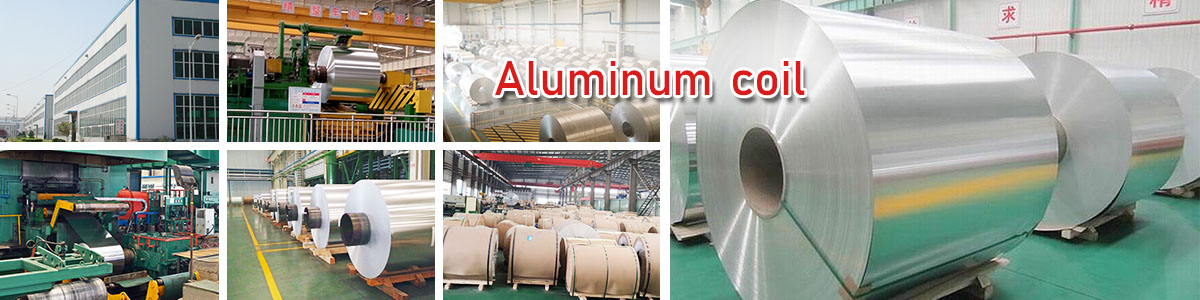
Lichen aluminum is a Chinese leading aluminum product manufacturer located in the capital of Province, P.R. . The products we are manufacturing include pharmaceutical foil, packaging foil, aluminum foil, aluminum plates, aluminum bars, aluminum plates, and aluminum
Regarding metal foils, Guo et al. recently reported triangular h-BN domain formation on the {100} plane of annealed Cu foil 21, and Lee et al. also reported that Ni {100} was more preferred than Ni {111} for the h-BN growth 23. Their research, however, was limited because the morphology effect of metal foil is still involved in the h-BN growth