They also studied the sound absorption characteristics of semi-open-cell foams,3 and concluded that the sound absorp-tion increased upon decreasing the pore opening size. A peak absorption coefficient of 0.8 was obtained for this aluminum foam in the frequency range of 800–2000 Hz. Wang et al.4 analyzed the sound absorption of aluminum alloy
Just few researches have investigated the acoustics of closedcell metal foam, despite its special structure has a great potential in the fields such as sound insulation and noise
aluminum sheet alloy almg3 5754 for sound barrier. Sound barrier, also known as sound barrier and sound wall, is mainly used for sound insulation and noise reduction of noise sources such as expressway, viaduct and railway. When the noise meets the sound barrier, three phenomena will occur: reflection, transmission and
Sound absorption: Demand for Noise Reduction of Submarine Muffler and Missile Destroyer: The sound absorption box made of foam aluminum acoustic board and the cavity behind it is installed in the engine room of the submarine, which can reduce noise by more than 20 decibels, and is conducive to making mute
The characteristics of the perforated membrane absorber were measured experimentally in terms of Sound Absorption Coefficient, α and Noise Reduction Coefficient, NRC by utilizing impedance tube
Core Tip: Metal foam is a new type of porous material. The metal of foam has the characteristics of continuous phase metal such as high strength, good thermal conductivity, high temperature resistance and characteristics of dispersed phase pores such as damping, isolation, insulation and noise reduction. Seismic and other organically
The membrane surface tensions have significant influence on the sound absorption characteristics. Membrane with non-stretched surface has better Sound Absorption Coefficient, α and Noise Reduction Coefficient, NRC values over the stretched membranes. The maximum α value obtained is very good which approximay 0.94 at 1600
The Noise Reduction Coefficient commonly abbreviated NRC is a single number value ranging from 0.0-1.0 that describes the average sound absorption performance of a material. An NRC of 0.0 indicates the object does not attenuate mid-frequency sounds, but rather reflects sound energy. This is more conceptual than physically achievable: …
Sound absorption properties of sintered Al fiber has over 0.7 of sound absorption coefficient with 800-2000Hz frequency for 0.6 relative density and 10mm thickness. NRC (noise reduction coefficient) is 0.73. Metal foam have good sound absorption rate at 2000 4000Hz. Access through your
Sound absorption is the measure of the amount of energy removed from the sound wave as the wave passes through a given thickness of material. Fig. 3.31 is a schematic representation of sound absorption and reflection of an insulating wall. While propagating from air into an absorbing material, the sound wave could experience reflection or absorption thereby losing energy, experiencing
1. Introduction. Noise pollution is an important factor in reducing people\'s quality of life .Long-term exposure to the noise environment will affect people\'s normal life and rest, easily cause insomnia and anxiety, cause learning disabilities, and even induce cardiovascular disease , .Aluminum foam as a porous material can be used for sound insulation and noise reduction, but also has the
The noise reduction coefficient of the sound proof wall composed of 3.5 vol.% and 7.5 vol.% of scrap aluminum chips relatively increased to 5% and 8% compared to the commercial polyester sound
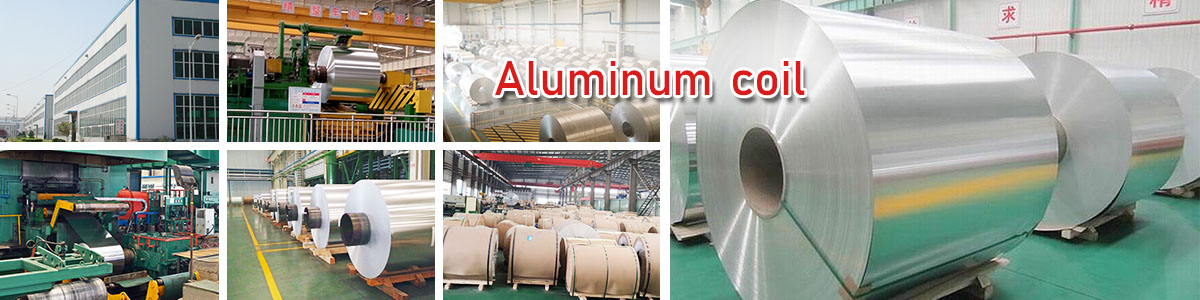
Aluminum specialty products are manufactured from metal coil or sheet, and are perforated and bent as needed for the customer’s specifications. Depending on Standard Test Method for Sound Absorption and Sound Absorption Coefficients by the Noise reduction
The sound absorption coefficient of FeCrAl fibrous porous materials with 94% porosity and 20 mm thickness was up to 90% at 120 dB and in the frequency range of 2.5-6.4 kHz. Sound absorbing
Sound absorption coefficient Noise reduction Green Vegetated roofs Substrates abstract An experimental investigation of the sound absorption characteristics of vegetated roof substrates and plots has been completed. First, an impedance tube was used to measure the normal-incidence ab-sorption coefficients of substrates and their
Keywords: cellular solids; aluminum lattices; vibration damping; noise-damping; sound absorption coefficient; transmission loss 1. Introduction The European Union has set severe targets to control emissions (CO2), having defined a 60% reduction in fuel consumption-related carbon emissions by 2050 [1]. A
The reverberation time is the time lag, in seconds, measured for the sound to decay by 60 dB in a space after a sound source has been stopped. The noise reduction coefficient is the average absorption coefficients of an acoustic material at a typical frequency set of 250, 512, 1024, and 2048 Hz defined according to the tube type and acoustic
Dynapore materials provide an excellent combination of characteristics required in noise reduction applications. Their sound absorption characteristics are enhanced by uniform permeability to flow and a geometry that helps to reduce turbulence within a desirable range of
Sound absorption is the measure of the amount of energy removed from the sound wave as the wave passes through a given thickness of material. Fig. 3.31 is a schematic representation of sound absorption and reflection of an insulating wall. While propagating from air into an absorbing material, the sound wave could experience reflection or absorption thereby losing energy, experiencing
Then, for a specific aluminum alloy wheel, a HR assembly including several HRs is designed to make the natural frequencies of HR assembly cover the TACRN frequencies. Finally, the reduction effect of TACRN is simulated and evaluated by comparing the sound fields in tire cavity with/without HR assembly under same volume velocity sound
characteristics required of the materials become more advanced. In particular, problems regarding noise have increased in recent years, and various demands for a reduction in noise have risen. Sound absorbing materials and interception materials are usually used to decrease noise.1) When sound enters porous materials such as soft
traffic noise reduction. Major research and development efforts are on-going globally in search of ways in which tire-pavement noise could be reduced. One major component of tire -pavement noise is the noise reflected from the pavement surface. This is related to the sound absorption
Sound absorption properties of sintered Al fiber has over 0.7 of sound absorption coefficient with 800-2000Hz frequency for 0.6 relative density and 10mm thickness. NRC (noise reduction coefficient) is 0.73. Metal foam have good sound absorption rate at 2000 4000Hz. Access through your
with increased sound reduction requirements is known, sound reduction still plays a subordinate role in the structural design of frame profiles. The following will focus on two key aspects which merit attention in practice. Due to the frame proportion of 20-30%, the sound reduction effect of a façade is essentially determined by the
Noise reduction coefficient of the samples was also computed. From the study, it is observed that low density fibre board possess high sound absorption coefficient and noise reduction coefficient when compared with high density fibre boards. It was seen that sound absorption coefficient increases with decrease in density and vice
silicon steel cores, a high cost and noise level are inevitable because the magnetostriction for amorphous metal alloy strip is larger than the ordinary one. This study mainly focused on the experimental systems and methods for magnetic properties measurement, vibration characteristics and noise level of amorphous alloy strip and
incidence sound absorption coe cient and the noise reduction coe cient, which were experimentally measured by the transfer function method using an acoustic impedance tube. The di erent factors that a ect the sound absorption behavior of the studied ABS specimens are presented in this
Sound absorption coefficients of natural fibers such as ramie, flax, and jute fibers and their composites possess good sound absorption properties compared with synthetic fibersThe natural fibers-based non-woven floor coverings such as kenaf, jute, waste cotton, and flax blended with polypropylene and polyester contribute to automotive interior noise reduction structures
Aluminum specialty products are manufactured from metal coil or sheet. The metal is perforated and shaped to customer specifications. Depending on the application, the aluminum may be coated or laminated with additional materials. A manufacturing flow diagram is detailed in Figure 1. 1.3. Product Average This EPD is intended to represent an
Single Wall STC 40-60 Microdyne Chambers are designed for applications and locations where the noise reduction characteristics for a single wall and ceiling construction provide adequate noise isolation. The single wall construction results in smaller overall outside dimensions and is particularly suited to placement in less noisy